Fungi are neither plant or animal, but they are one of the most important groups of organisms on the planet. The main body of a fungi is made of fine, branching usually colourless threads called hyphae. Each will have vast numbers of these hyphae intertwining to make up a tangled web called the mycelium. What we see above the ground, a mushroom or toadstool is the fruiting body which produces the spores. Fungi come in all shapes, sizes and colours from the Giant Puffball Calvatia gigantea to the small Burgundydrop Bonnet Mycena haematopus or the tiny rusts growing on the leaves of plants.
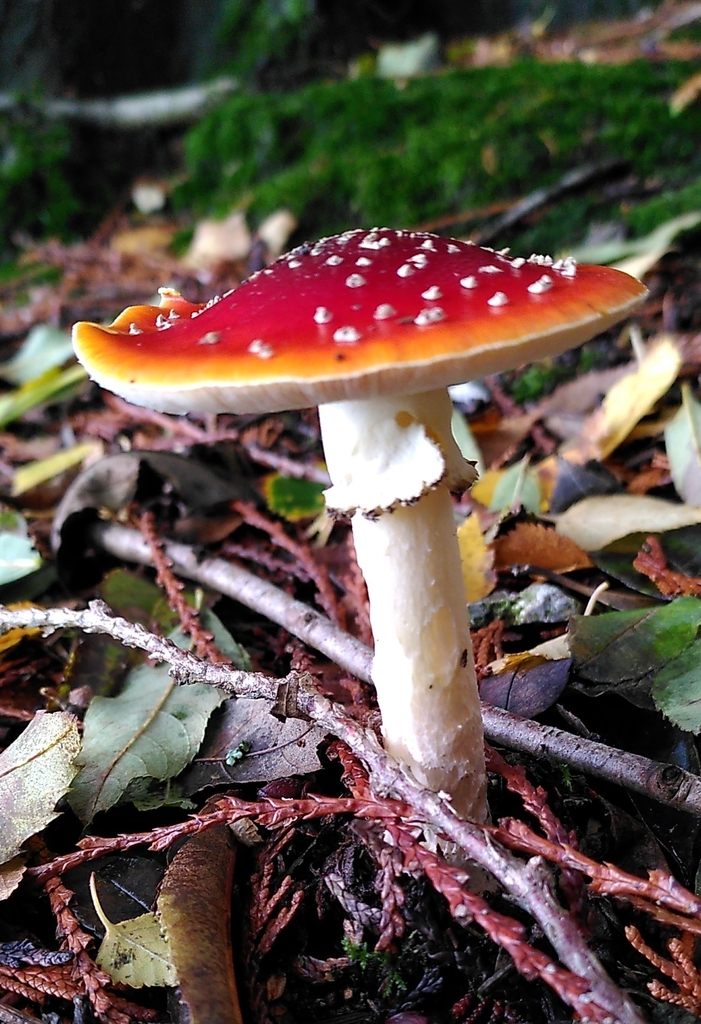
Fly Agaric (Amanita muscaria)
Woodland fungi
Woodland is the habitat we most associate with fungi Many woodland trees have mycorrhizal associations with trees, the well know Fly Agaric Amanita muscaria is strongly associated with birch trees. While oak trees have this beneficial relationship with fungi such as Oakbug Milkcap Lactarius quietus and Purple brittlegill Russula atropurpurea. Other woodland fungi have the vital role of decaying dead matter, returning the nutrients to the soil. However not all fungi are beneficial, some are parasites that can kill trees, a well-known example is the Honey fungus. Some trees have large bracket fungi growing on them such as Birch Polypore Formitopsis betulina, these backets are hard woody growths that can persist for many years.
Grassland fungi
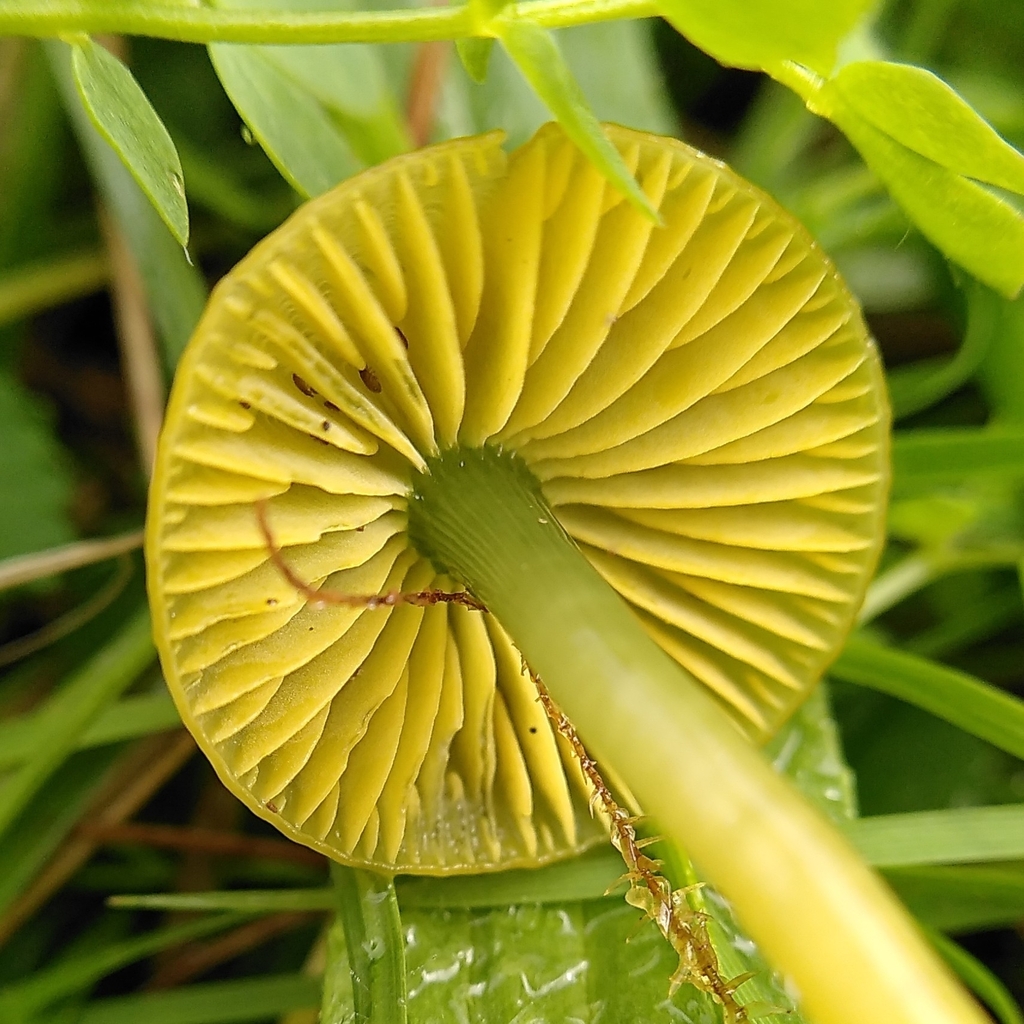
Grasslands can also be an important habitat for a range of fungi, especially the Waxcaps, a group of brightly coloured toadstools with thick widely spaced gills. The cap of these fruiting bodies often feels waxy, hence the name, for example Parrott waxcap Gliophorus psittacinus. In the last thirty years, conservationists have come to realise the importance of Waxcap Grasslands for their amazing biological diversity. Many such grasslands have been lost due to agricultural practices. Waxcaps are joined by other species such as Pinksgills, Club fungi and earthtongues. There are some fungi found in grassland that are associated with animal dung, again these have an important role in recycling nutrients.
Parrot Waxcap (Gliophorus psittacinus)
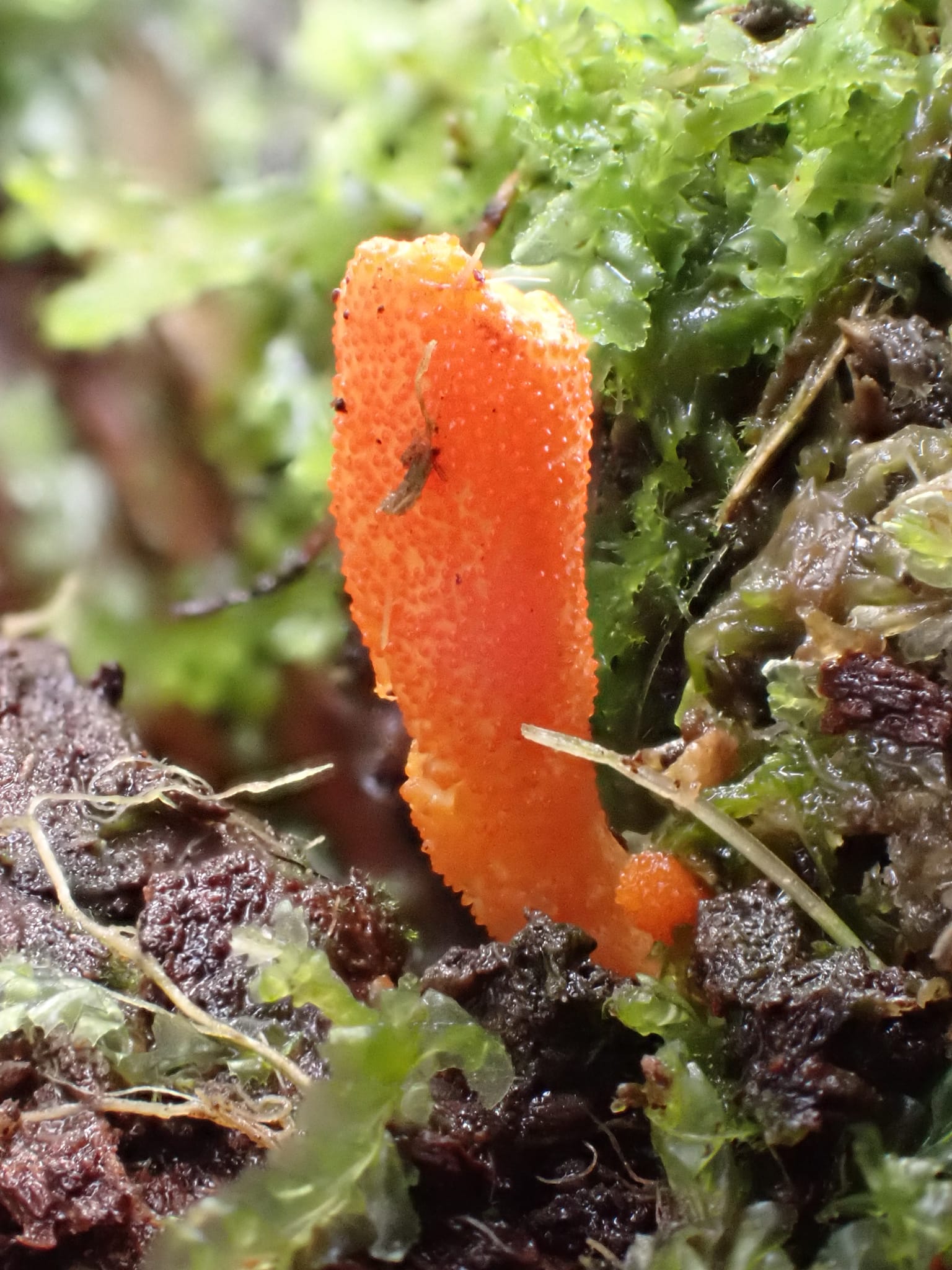
Scarlet Caterpillarclub (Cordyceps militaris)
Autumn forays
Autum is the time of year when RoAM organises fungi forays visiting the reserves in the Avalon Marshes and Mendips. We do not collect mushrooms to eat them but to record their location and admire their beauty. Identifying fungi requires careful observation of the fruiting body, characters looked for include the colour of the cap, the type of gills, how they are attached to the stem. Feel, is it sticky? And smell can all provide clues to the identification. In some cases, it is necessary to use a microscope to examine the shape of the spores and measure them.
RoAM membership
As a member of RoAM you will receive advance information about all the events we organise. And fungi forays are always included in our autumn program.