Somerset has around 700 macro moth species recorded within vice-county five and vice-county six which make up the ancient county of Somerset. Not all of them live in the county now as numbers have declined. As global warming increases, however, we are constantly adding new species that are heading north from the continent. Some of the new arrivals are quite spectacular, and in previous times were considered the “holy grail” of moth collectors. Nowadays, people tend to observe the moths that come to their lights and let them go free after noting their presence and perhaps photographing them. Since the late 1980s, Somerset has had a thriving moth group. Their website can be found at https://www.somersetmoths.org/
RoAM has trapped moths in the Avalon Marshes area for several years and has been involved in various projects looking at how we can best monitor species and give the local reserve managers accurate information as to which species breed on their reserves and important foodplants for those species. A group led by Fred Giles has developed a moth trap that utilises LED lights in the ultraviolet range that is most attractive to many moth species. This is specifically designed to attract moths from a smaller area than the large 125 Mercury Vapour lights so that links can then be made with the trap’s location and plants in the immediate surrounds which can be linked to species found in the traps. This work is an important citizen science project that is now being replicated in other areas. The beauty of this new design is that the traps are much more portable than the Mercury Vapour lights and can run off a portable powerbank for many hours, obviating the need to lug a large generator out into the countryside.
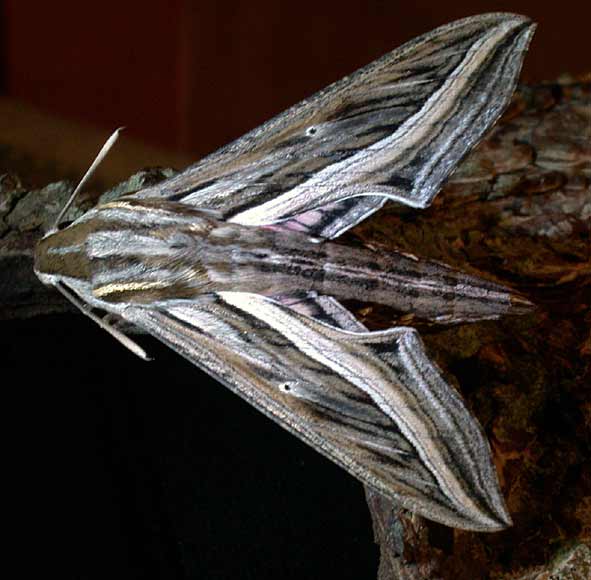
Silver-striped Hawkmoth
Micro Moths
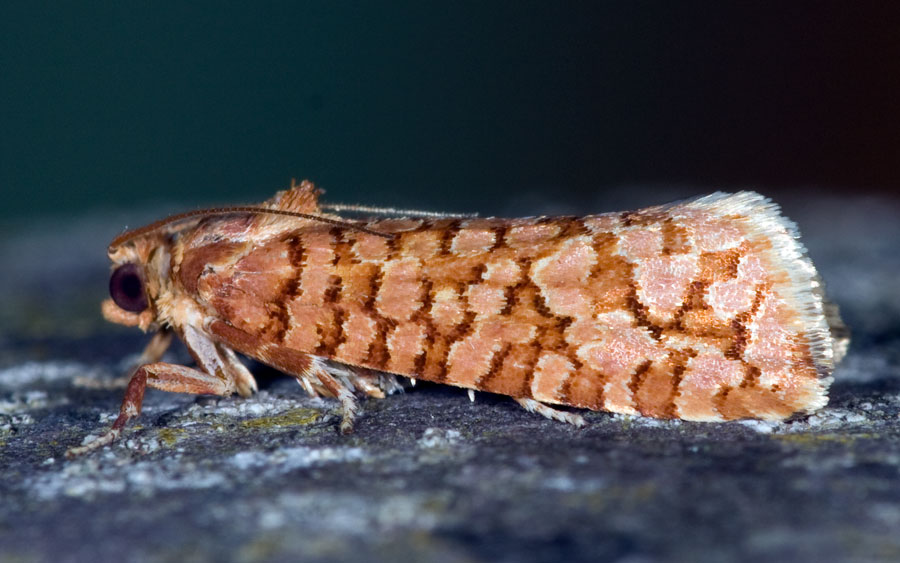
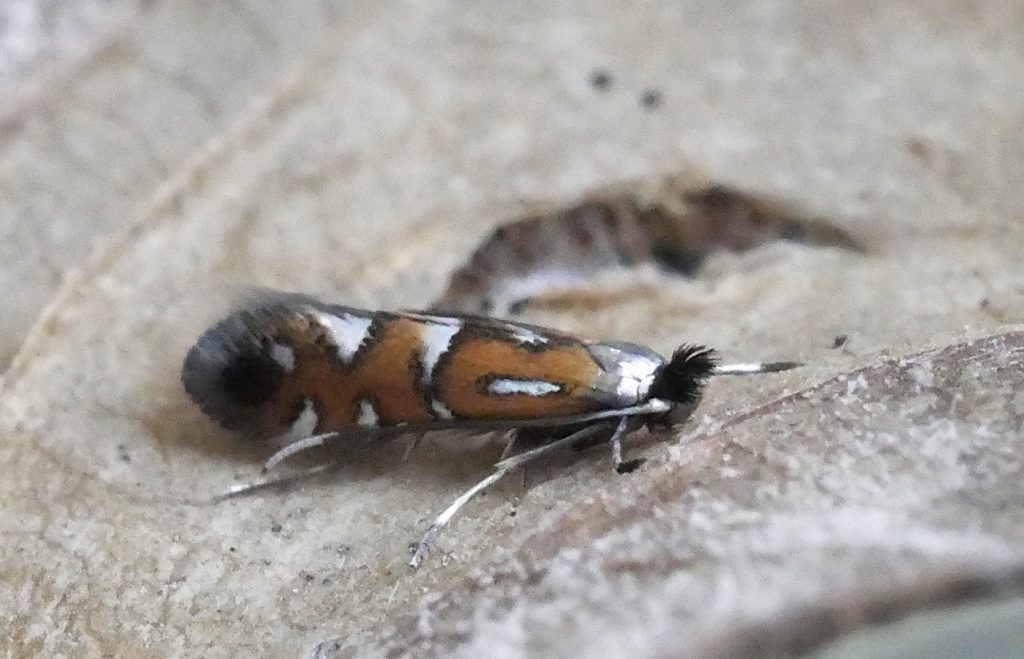
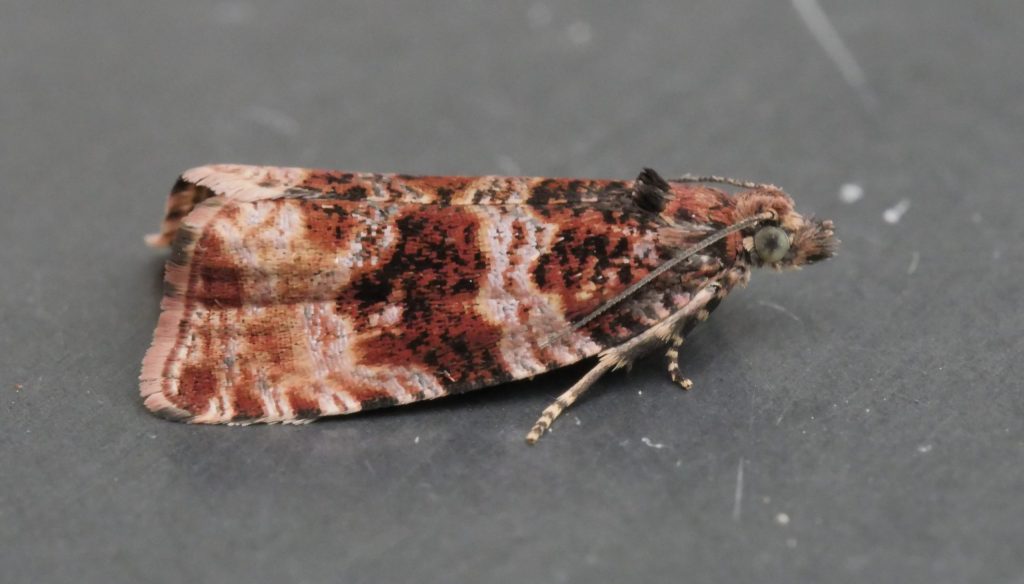
Lozotaenoides formosanus - Orange Pine Tortrix
There are many more micro moth species in Somerset than there are macro moths, well over a thousand in fact, with new species being regularly discovered by diligent enthusiasts. It is probably true that most species of plant in the country have at least one species of moth whose caterpillars use it as a home and food source as they grow towards pupation.
As their name suggests, most species of micro moth are only a few millimetres long, although confusingly, some micro moths are larger than the smallest macro moths. They come in a wide range of colours and shapes, with some, like the Orange Pine Tortrix pictured here looking excitingly splendid, while others are of a more uniformly drab appearance and prove a difficult identification challenge, as adults, for those wishing to study them. Luckily, their caterpillar’s feeding methods and the choices they make as to where and when to breed give some hope to the moth enthusiast
Micro-moths and their Early Stages
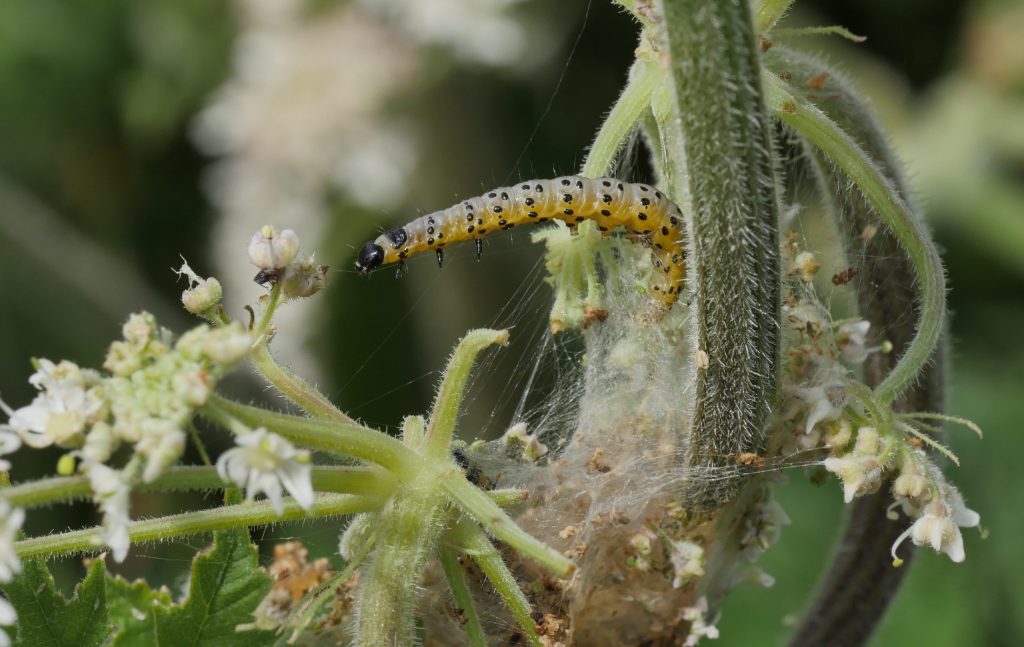
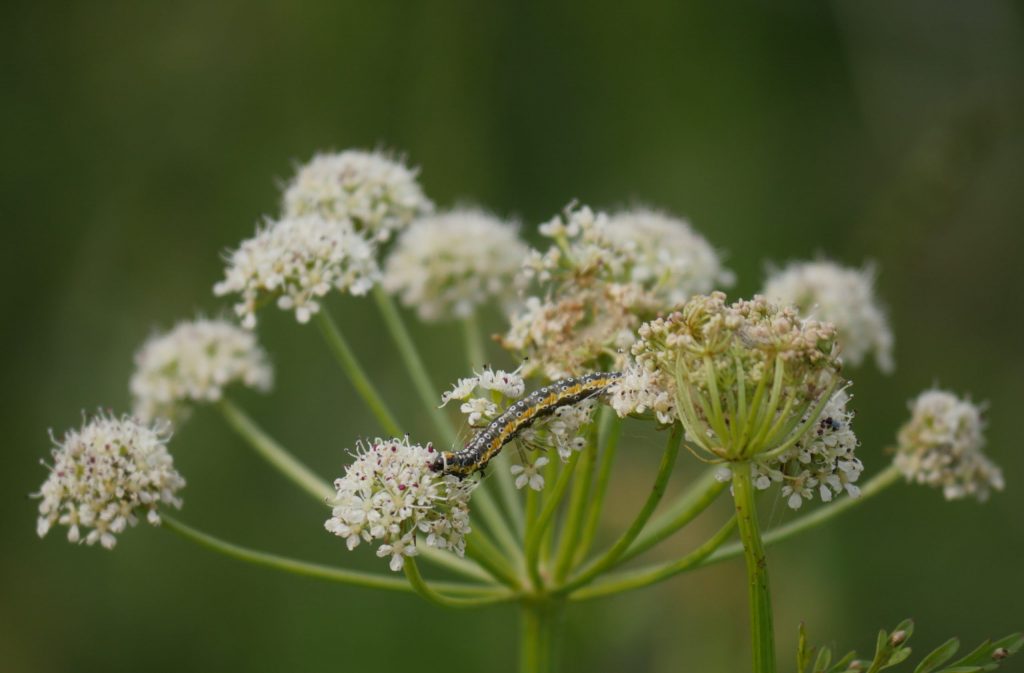
There are approximately 1500 species of micro moths in Great Britain and a great number of them will never make their way into a light trap. Therefore the best way to find these massively under-recorded species is to look for their early stages. Finding the early stages indicate the species of micro moth definitely using the food plants available on site and crucially, proof of breeding. Once one goes down this road, it is immensely addictive. It also improves botany skills as many species will only be found on a particular tree or herbaceous plant, though some micro moth species do use a variety of plants. There are micro moth early stages to be found in every month of year even in the depths of winter. There are various ways that micro moths feed in their larval stage, the main ones being listed below.
Leaf Mines
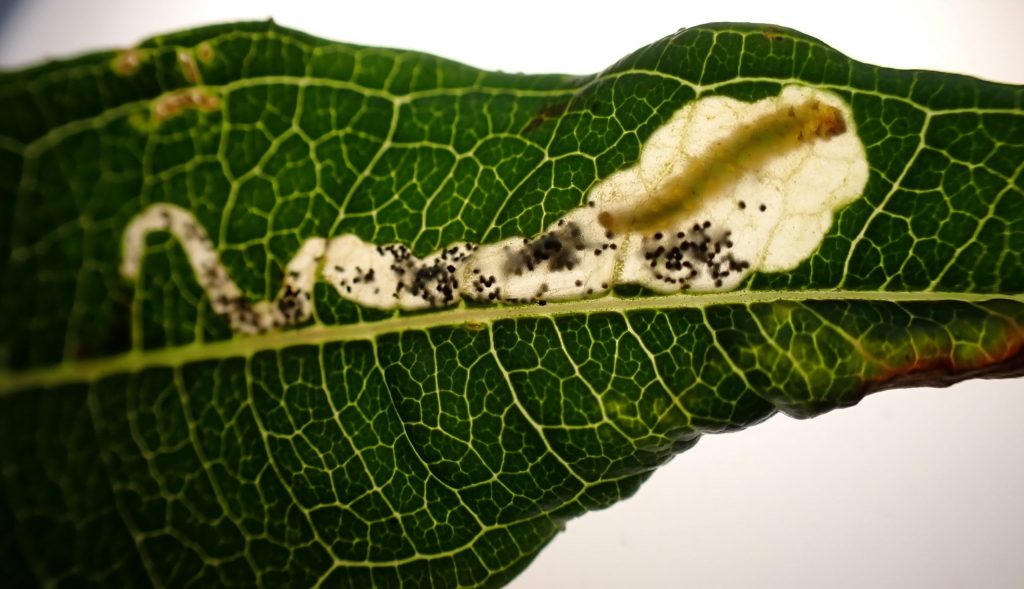
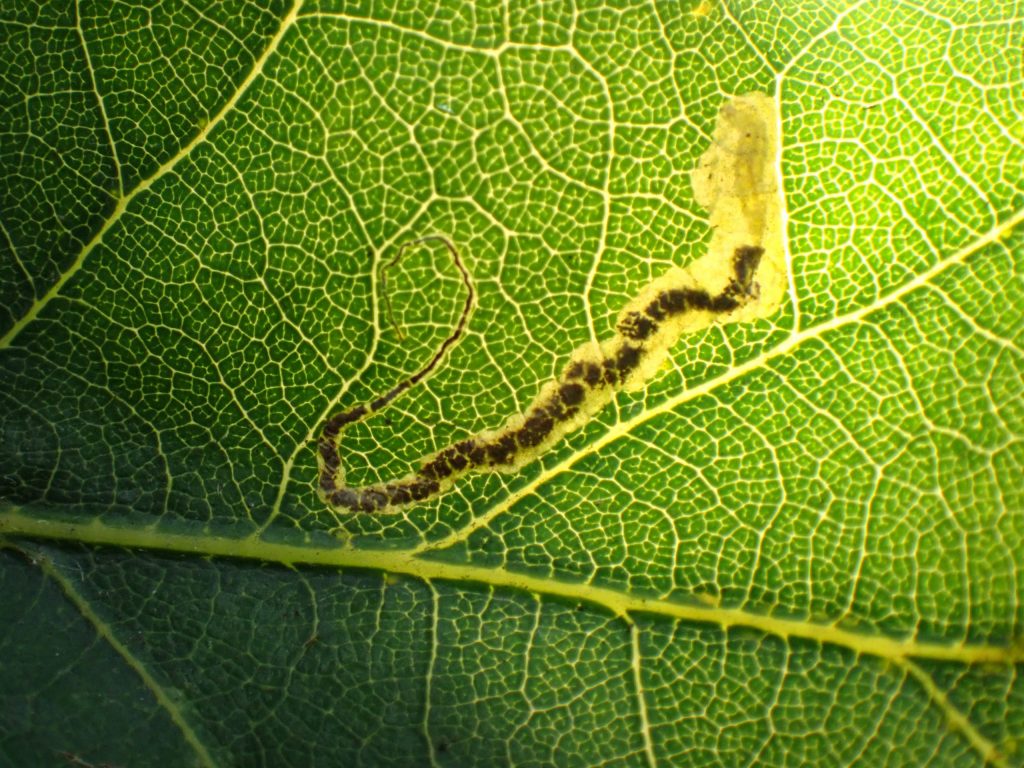
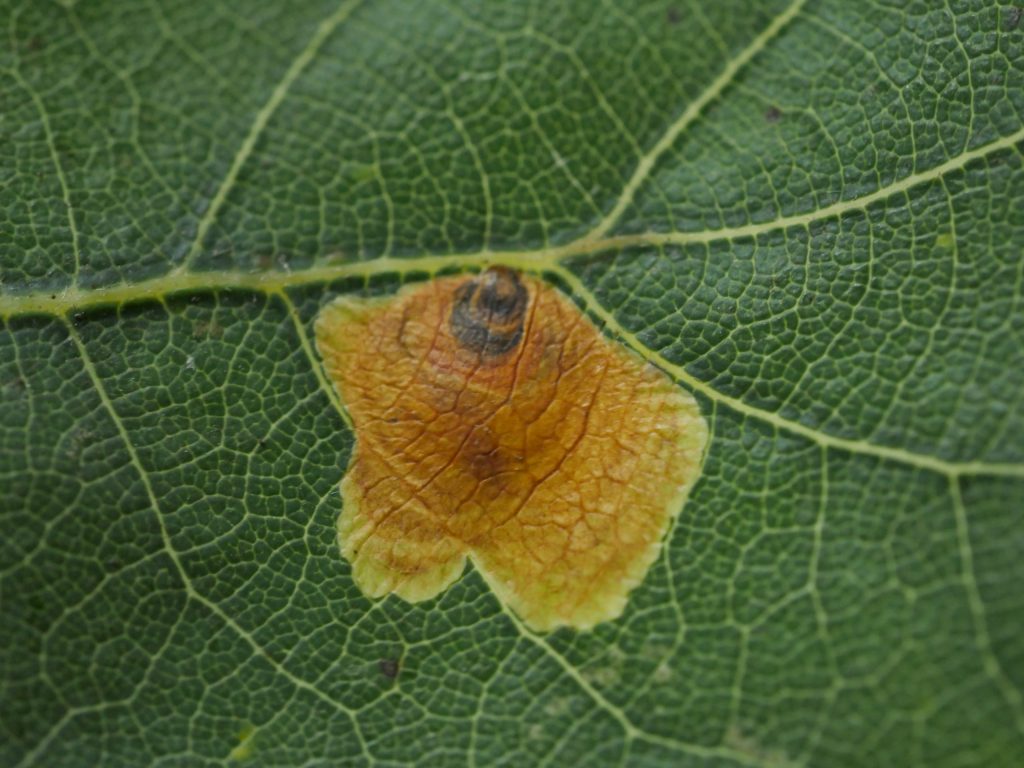
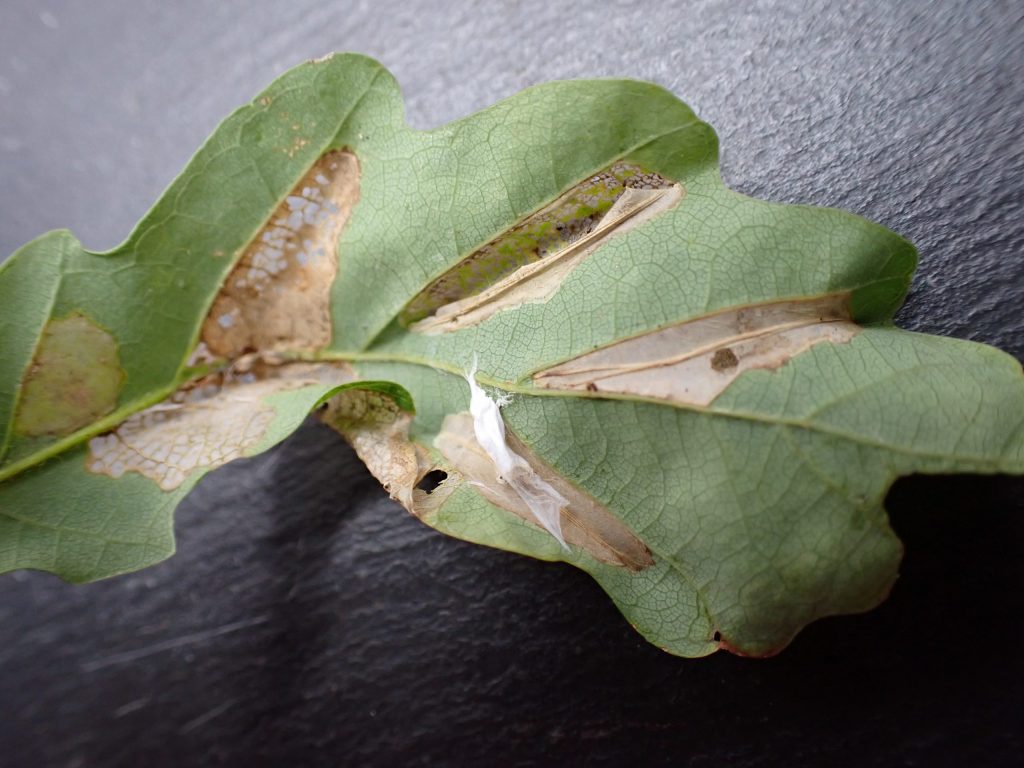
Many families of micro moths feed on the leaves of trees and herbaceous plants. They usually feed between the upper and lower edpidermis making distinctive corridors and blisters on the leaf. Various factors help to determine a particular species ie: the species of plant used, which side the egg is laid, whether it produces a corridor or blister, the way the frass (larva poo) is distributed (linear, coiled or dispersed). It’s an endless and fascinating exploration that is going on all around us.
Mompha raschkiella - Fireweed Mompha, leaf mine
Mompha raschkiella - Fireweed Mompha, adult
Stigmella samiatella - Chestnut Dot, leaf mine
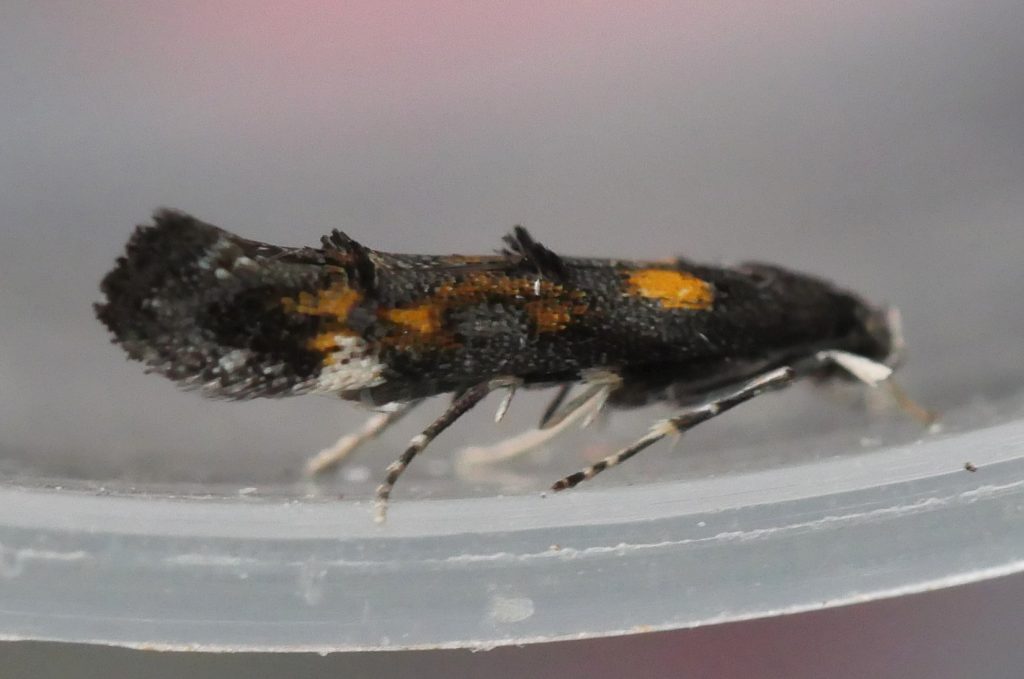
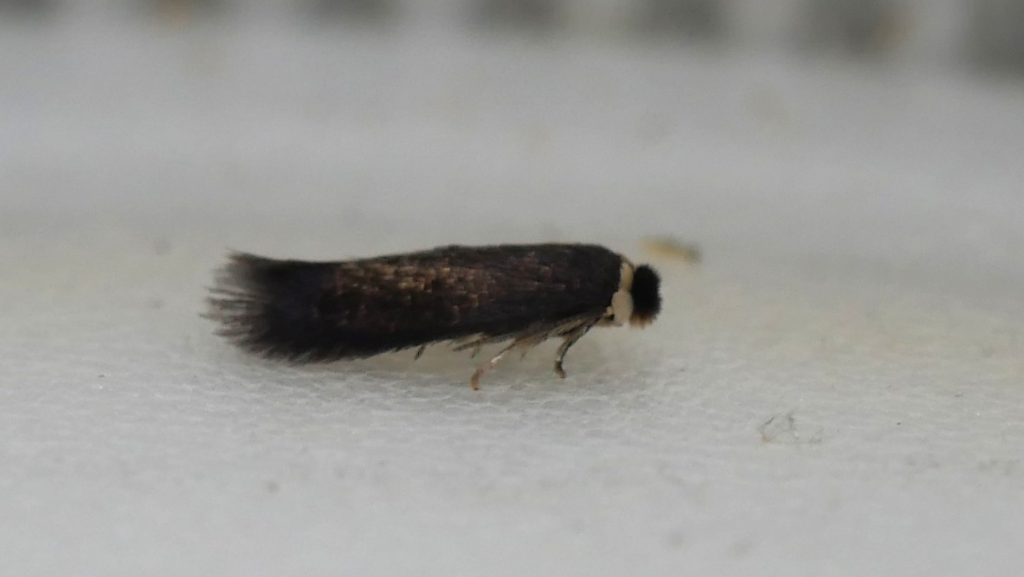
Stigmella samiatella - Chestnut Dot adult
Tischeria dodonaea - Small Oak Blotch Miner, leaf mine
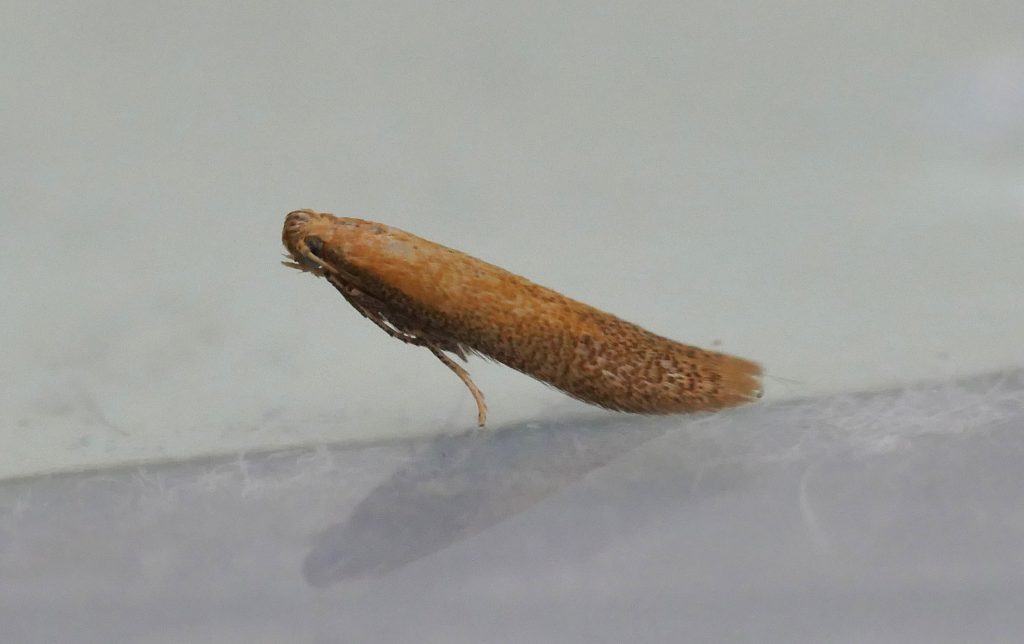
Tischeria dodonaea - Small Oak Blotch Miner adult
Phyllonorycter lautella - Small Oak Leaf-miner, leaf mine
Phyllonorycter lautella - Small Oak Leaf-miner, adult
Larval Cases
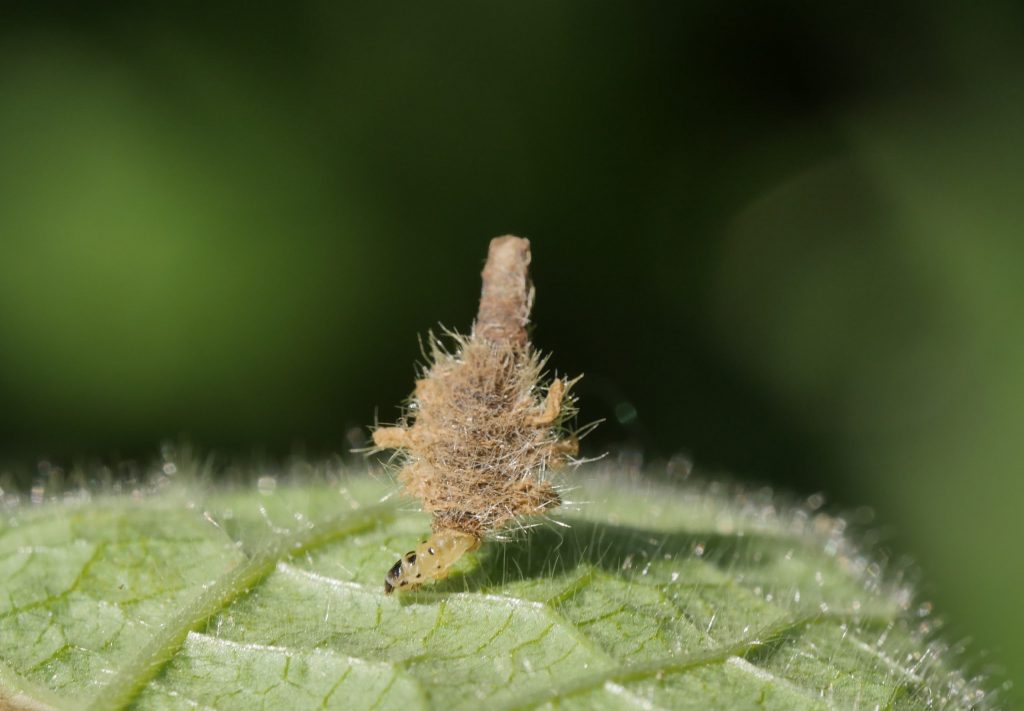
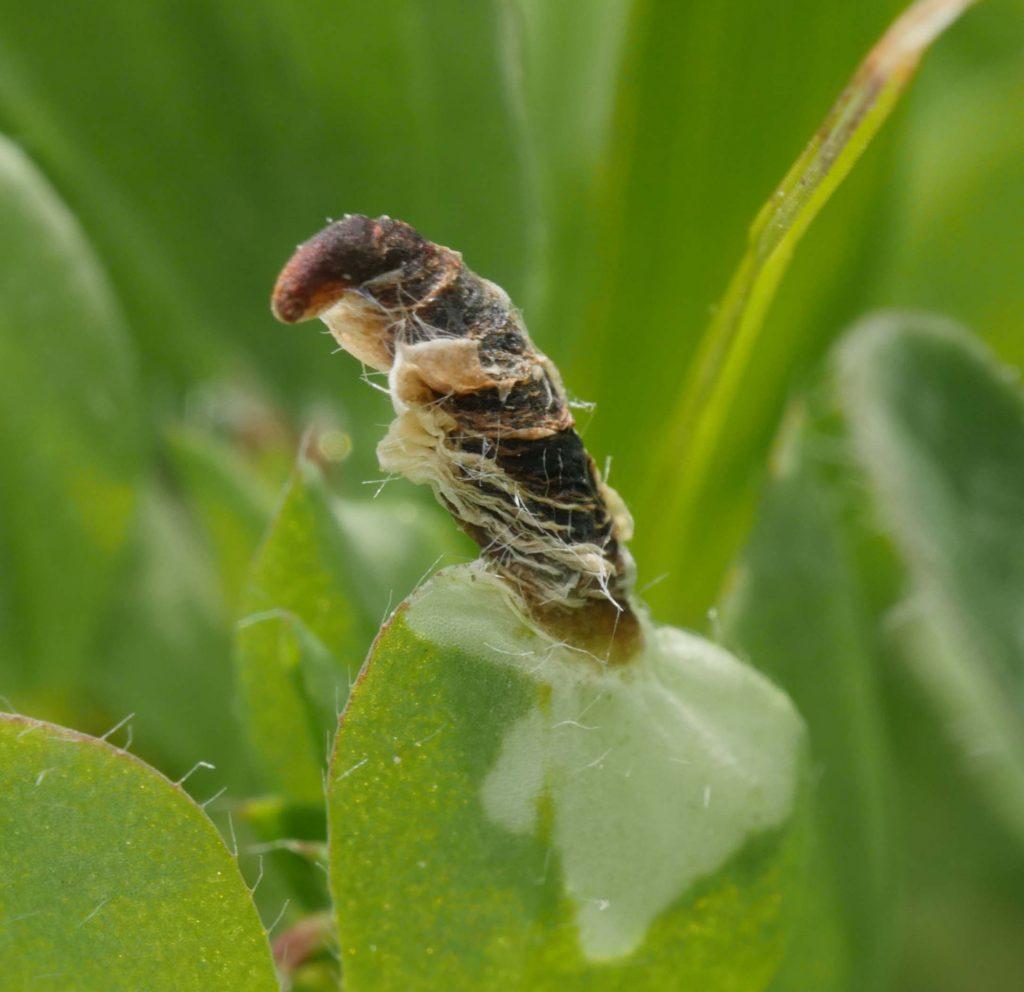
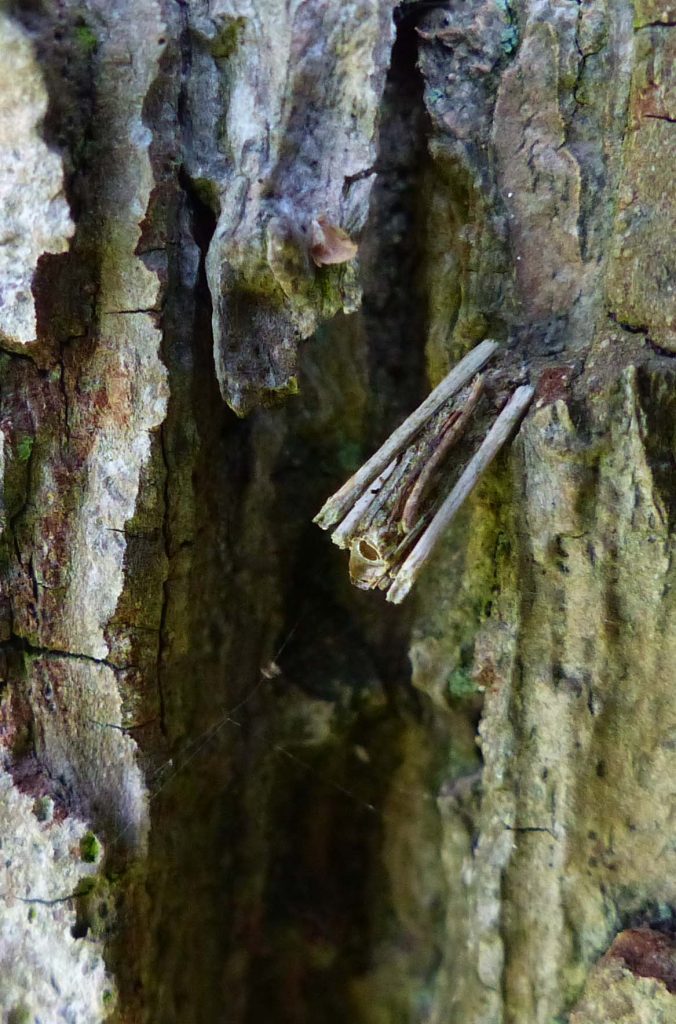
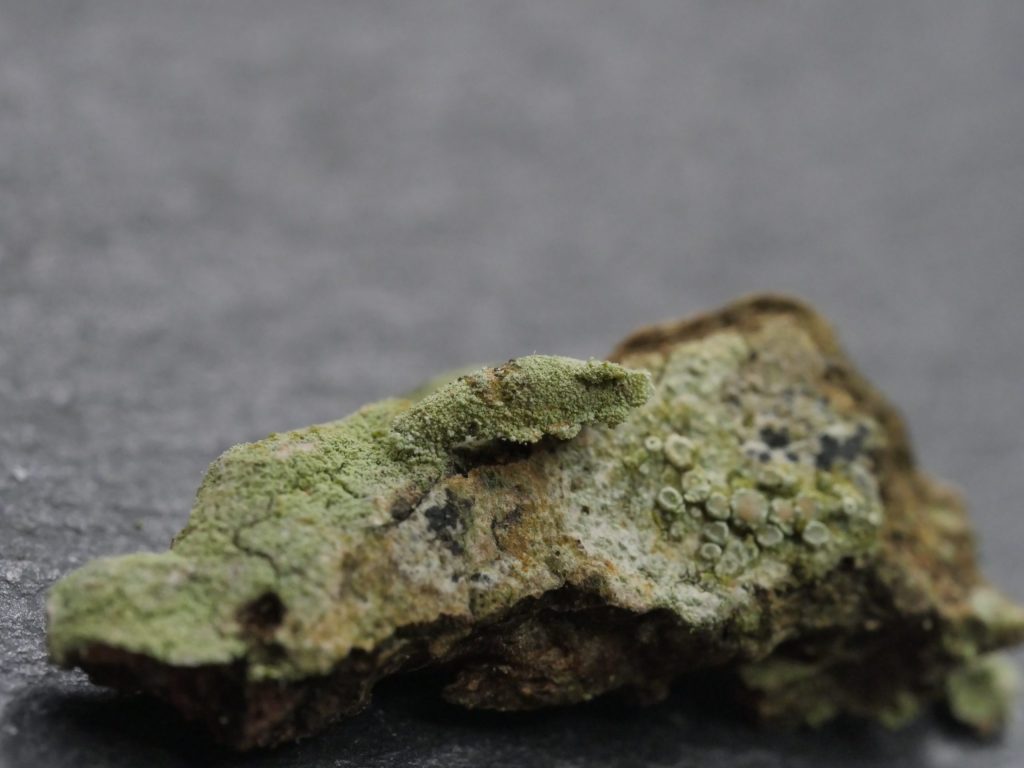
There are two main groups of micro moths where the larvae produce a larval case from which to feed rather than a mine. The Coleophoridae (Case-bearers) and the Psychidae (Bagworms). In the case of the Coleophoridae, the larva will construct a case (usually from the leaf or seed head of the foodplant) and proceed to feed from within that case. With the Psychidae (Bagworms), the larvae also construct a silken case and then adorn it with a variety of materials (lichen, plant stems, dead insects etc) to the case and then proceed to feed from within that case.
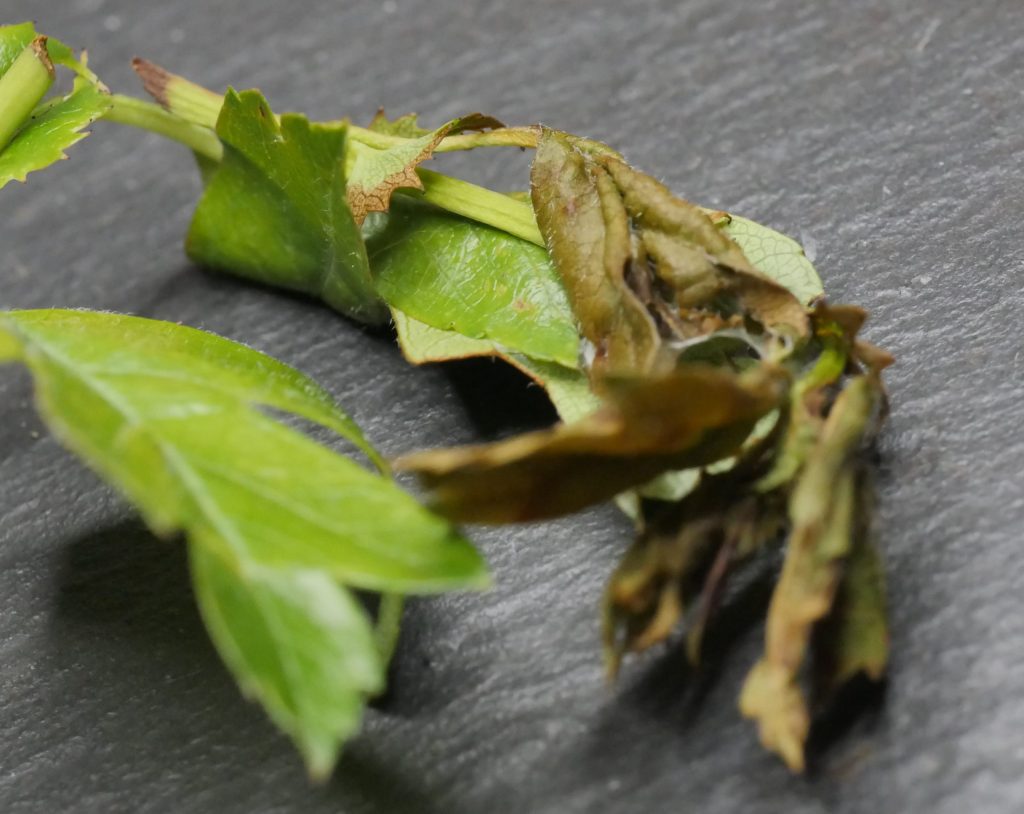
Another way micro moth larvae feed will be to fold or roll a leaf, or spin leaves or flower buds together and feed within. Many families of micro moths do this and these are the ones where breeding a moth through to the adult stage is often needed to prove the species.
Orthotaenia undulana - Dusky Marble in leaf spinning on Crataegus monogya - Hawthorn
For those who don’t want to spend time out in the dark, tending a mercury vapour trap but would like to study moths, then looking for leaf mines is the perfect occupation. There is lots of online help, including the Dutch website: https://bladmineerders.nl/en/introduction/mines/ This comprehensive site covers all kinds of invertebrates that mine plants for sustenance. There are also books that will help you to find out more about the wonderfully complex variety of ways in which micro moths develop from egg to adult.
–
Facebook has groups that deal specifically with early stages of Lepidoptera. Just keeping a watchful eye on those groups at the beginning of your journey to becoming an enthusiast will help give you a sense of what is about that you might try to find for yourself. Early Stages UK (Lepidoptera) is one such group and British Leafminers is another that you will probably find useful to visit.
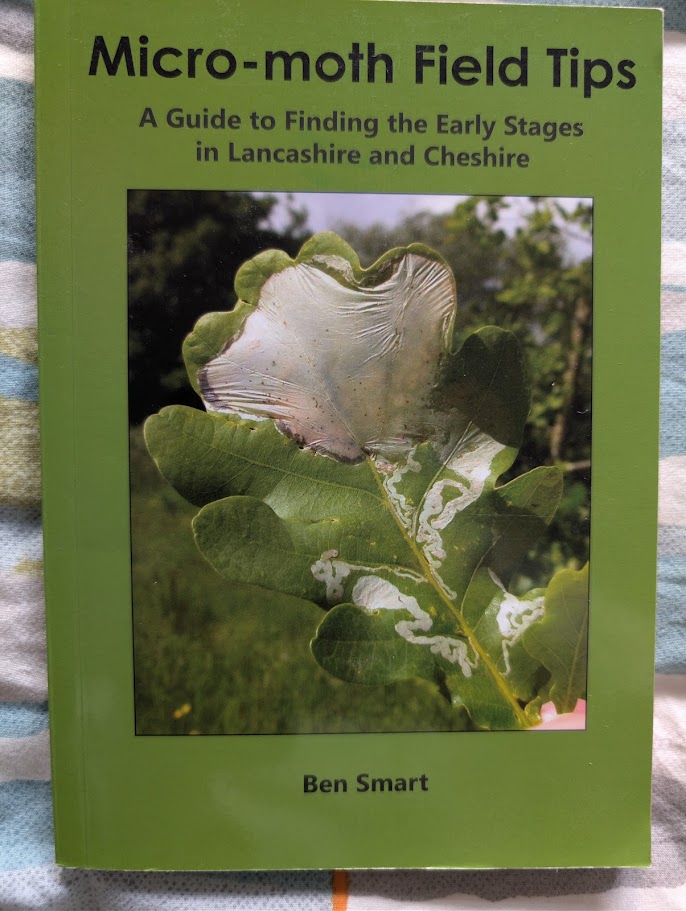
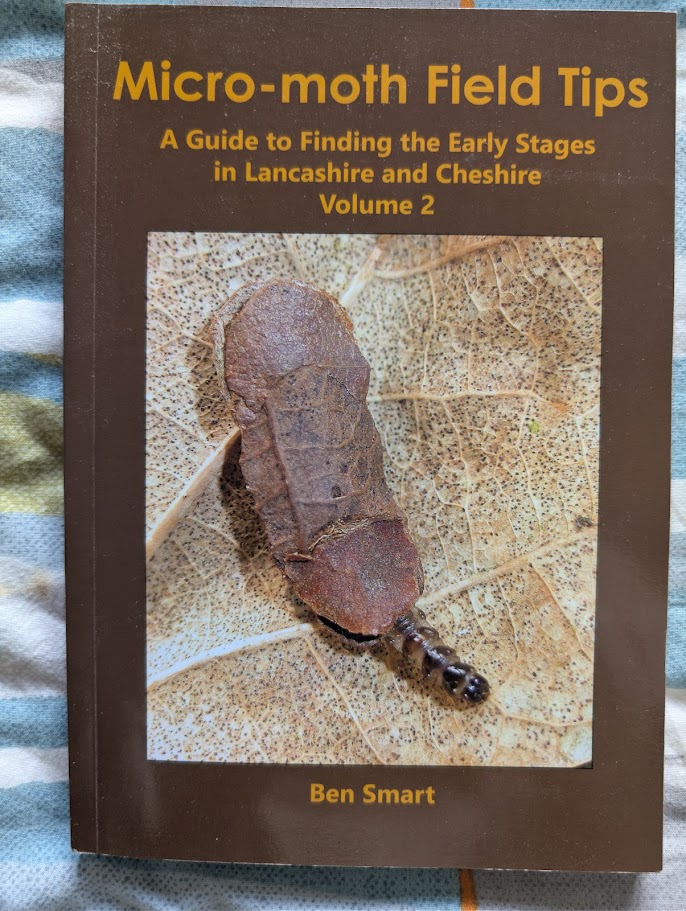
Books to Help You
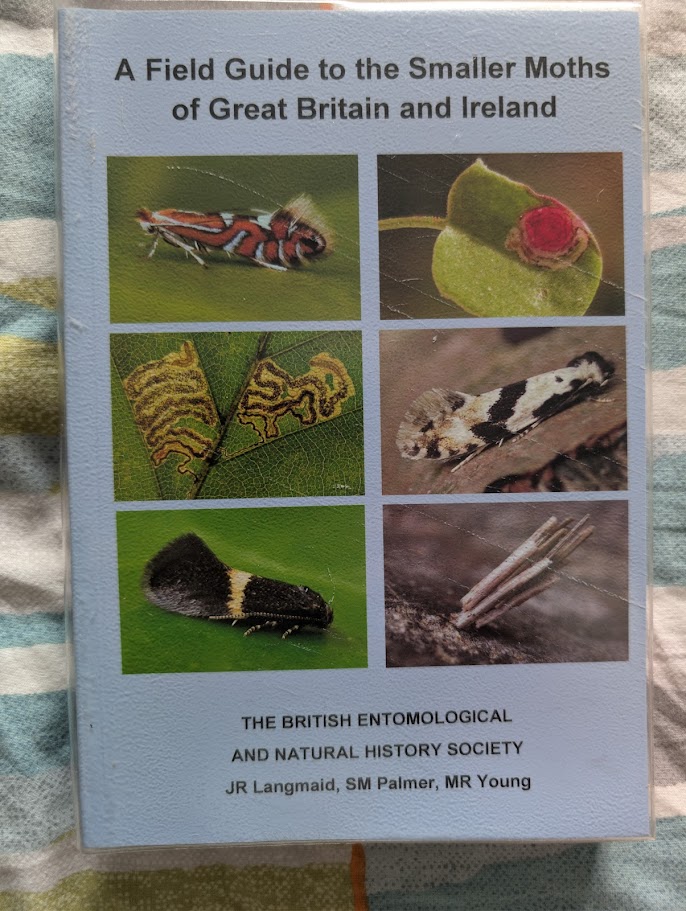
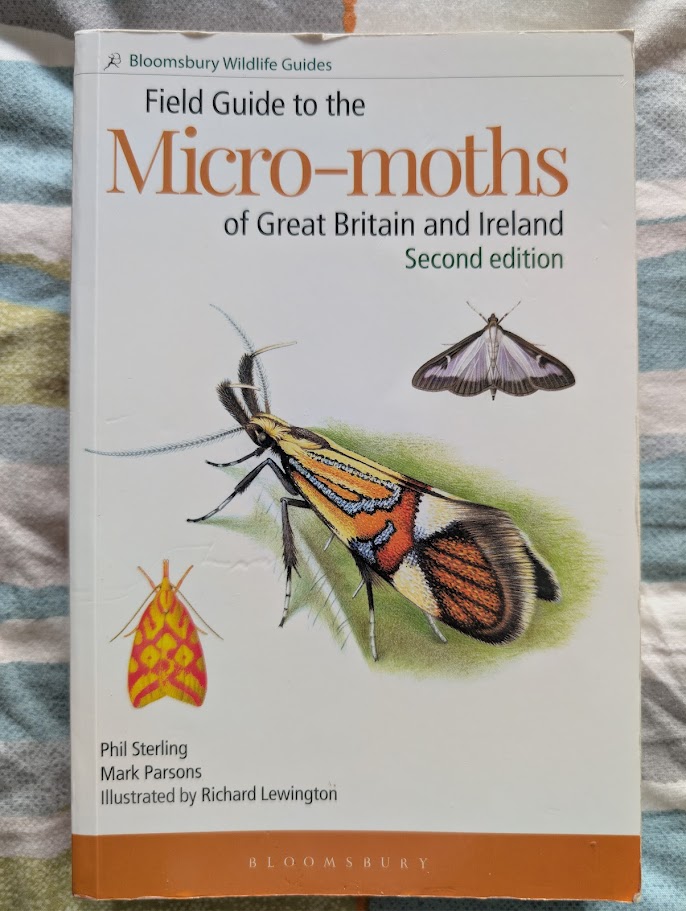
This book is invaluable to the micro-moth recorder. It is full of useful tips to help you to find species in your own area of the country.