The Avalon Marshes have a RAMSAR designation as an important international wetland area. This is largely due to the aquatic invertebrate population that exists here and supports a growing list of other species.
Base of the food chain
Aquatic invertebrates play their part in maintaining the biodiversity of the area, mostly as nutrition within the food chain. For example, frogs lay masses of eggs, “frogspawn”, which become many thousands of tadpoles. If all those tadpoles grew into frogs, we would not be able to move without stepping on a frog. Most of them end up as food for a larger creature. Without the large numbers of frogs that inhabit the Avalon Marshes, we would not see the superb populations of herons, egrets, and bitterns that inhabit this area and delight visitors. If the frogs did not have thousands of aquatic invertebrates, such as mosquitoes and flies, to feed on, they would not survive, nor would the creatures that feed on the frogs. It is a similar situation with mosquito and fly larvae that spend their early stage underwater. They largely end up as food for fish, dragonfly, damselfly, and predatory aquatic beetle juvenile stages.
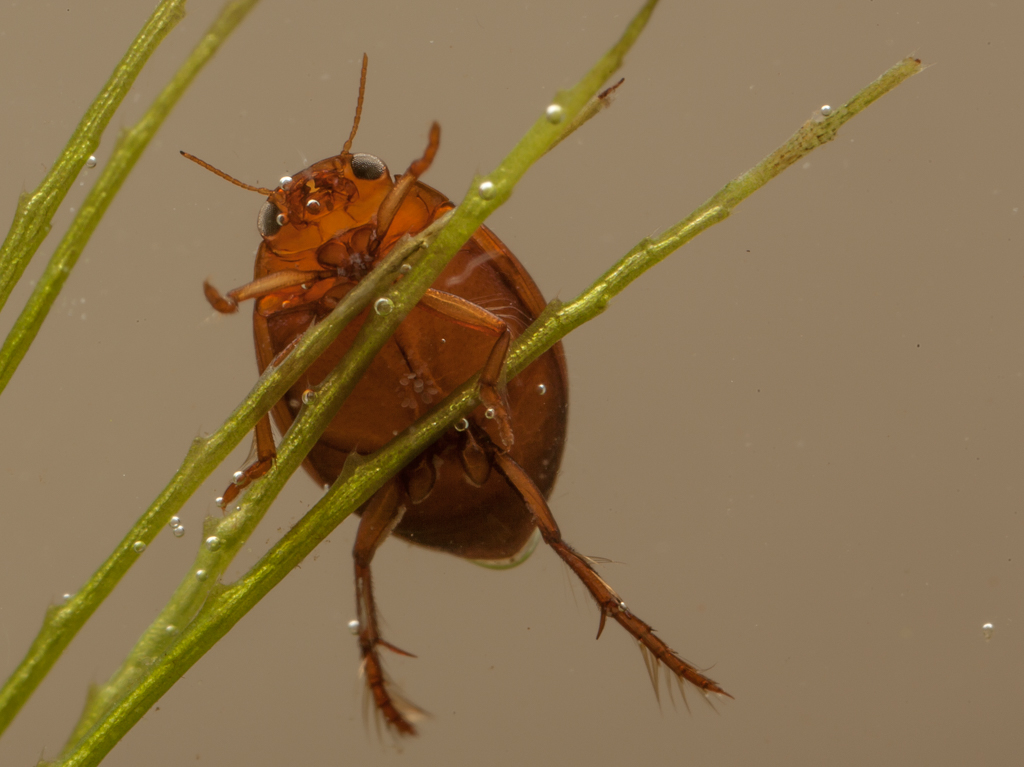
Hyphydrus ovatus
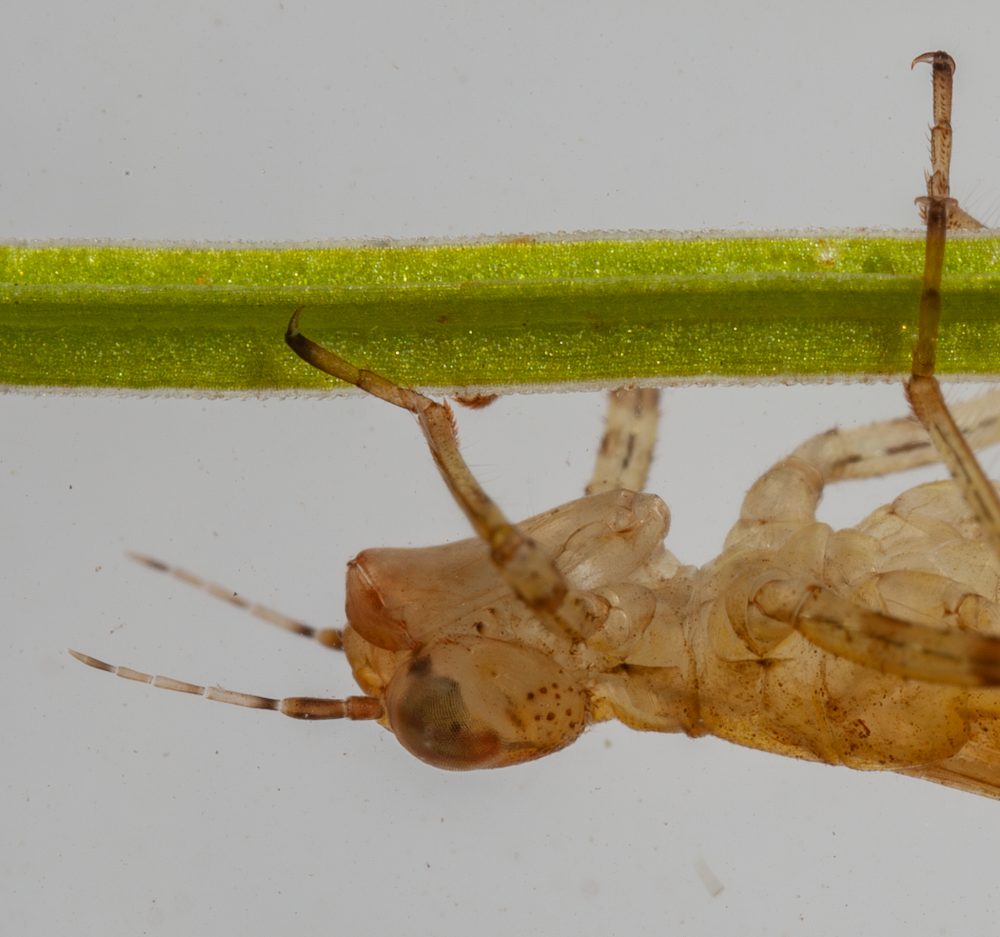
Damselfly nymph (Coenagrion sp)
Dragonfly and damselfly nymphs
Dragonfly and damselfly nymphs emerge as adults in April/May in their hundreds of thousands. They form an important source of food for the migratory falcon, the Hobby. These birds spend the winter in Africa, returning to the UK in early May. After such a long migration, they need a feed before starting to nest and so spend most of May feeding on dragonfly and damselfly adults. They then find a crow’s nest that is no longer in use, as the crows have fledged by that time. They raise their family there before starting the long migration back to Africa for the winter. Places such as the Avalon Marshes, with many dragonflies and damselflies, are an important stopover for large numbers of Hobby.
Aquatic molluscs
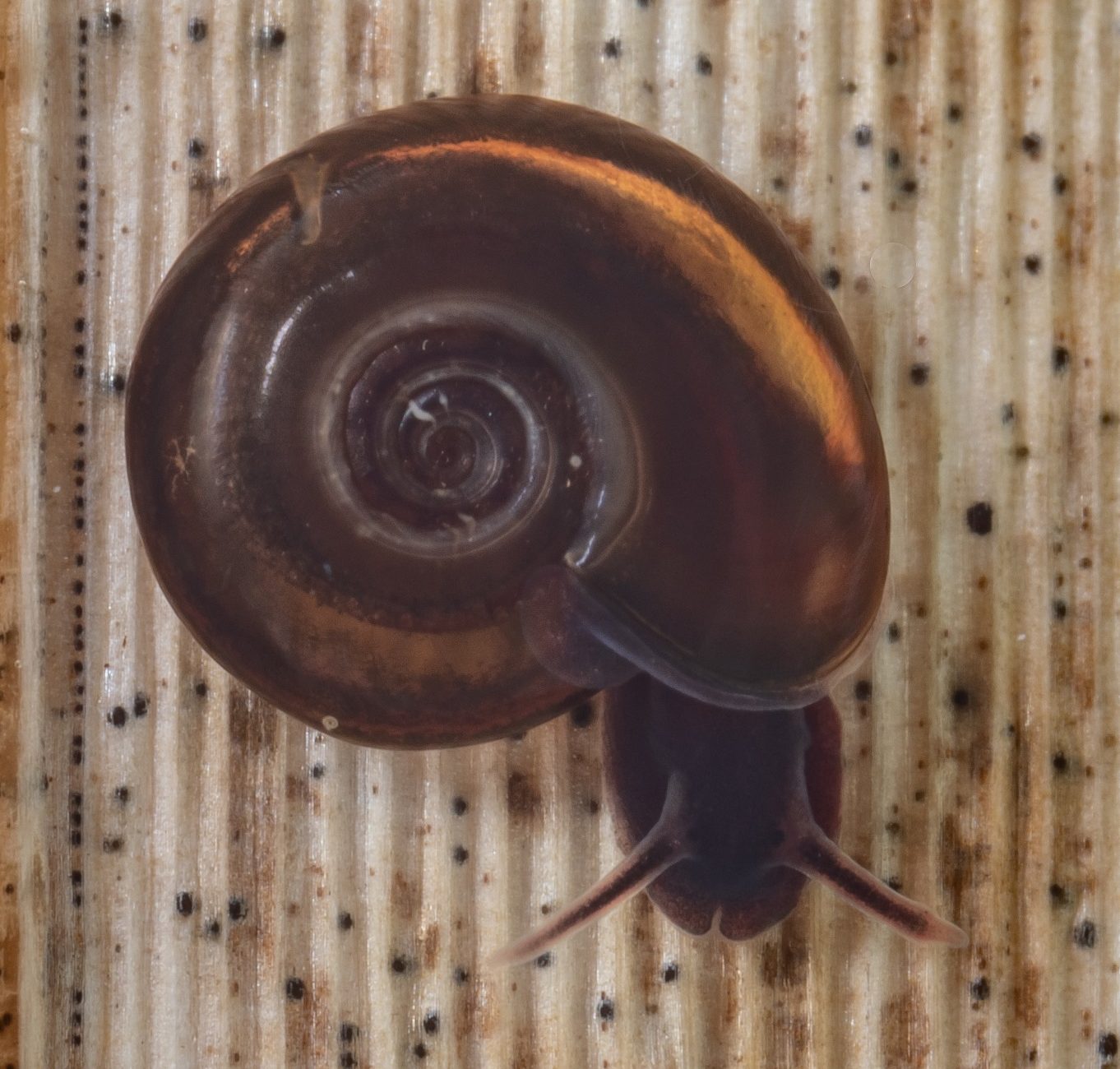
Aquatic molluscs are very numerous and probably form one of the most important sources of biomass within the pools and ditches. They are herbivores and keep the aquatic vegetation in check as well as being a food source for many other species. They range in size from the tiny Shining Ramshorn Snail to the huge Swan Mussel and have a vital role to play in keeping our aquatic environment healthy.
Shining Ramshorn Snail (Segmentina nitida)
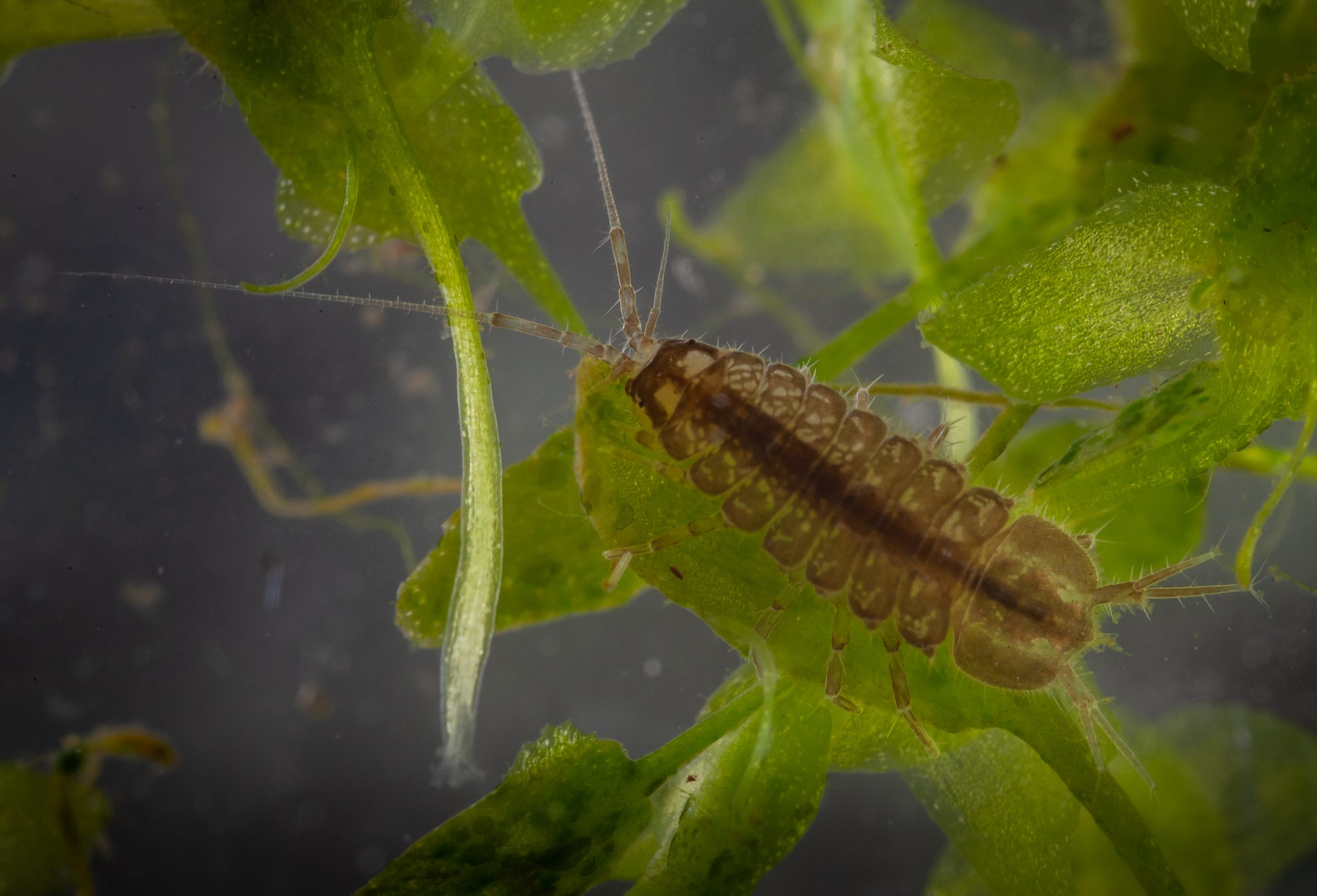
Water hog louse (Asellus aquaticus)
Healthy waterways
Some aquatic invertebrates perform a very important job in maintaining the health of our waterways by helping to clear the detritus that falls to the bottom of the pools and ditches. The Hog Louse (think submarine woodlouse) exists in large numbers at the bottom of pools and ditches and eats decaying vegetable matter. Many other worm species perform a similar function and keep our ditches cleaner than they would otherwise be.
Monitoring aquatic invertebrates
RoAM has an important role to play in monitoring the state of these important populations of invertebrates. They are an early warning system when things go wrong, their populations decrease dramatically, and a signal that all is going along nicely when they are in good numbers.