
RoAM Field Meeting Report for 12th September 2024
Site and Grid Reference Catcott Complex Nature Reserve ST4041
Recorders Stephen Parker and Sharon Cooper
Target Plant galls
Searched vegetation for the plant galls along Higher Ropes Drove, then to Lower Ropes Drove.
Galls
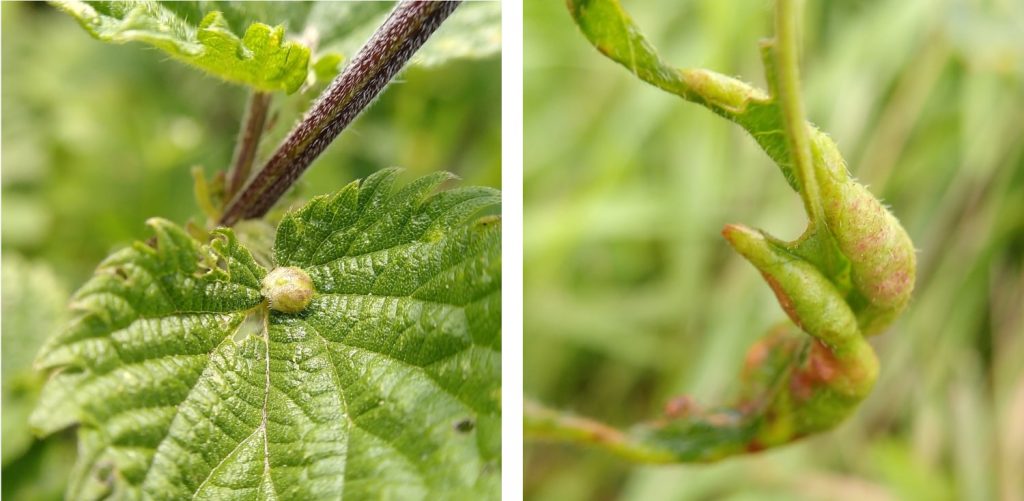
We recorded a total of sixteen gall species, including common ones such as the leaf gall Wachtliella persicariae on Amphibious Bistort, and Dasineura urticae on Stinging nettle. Alder had a series of very common species, including the Alder Tongue (Taphrina alni) and Birch Besom (Taphrina betulina) galls caused by a fungus. Both are now frequently found across the whole of the Somerset Levels. The leaves of willows frequently host insects that gall the leaves. Hawthorn produced Phyllocoptes goniothorax and Dasineura crataegi on the leaves.
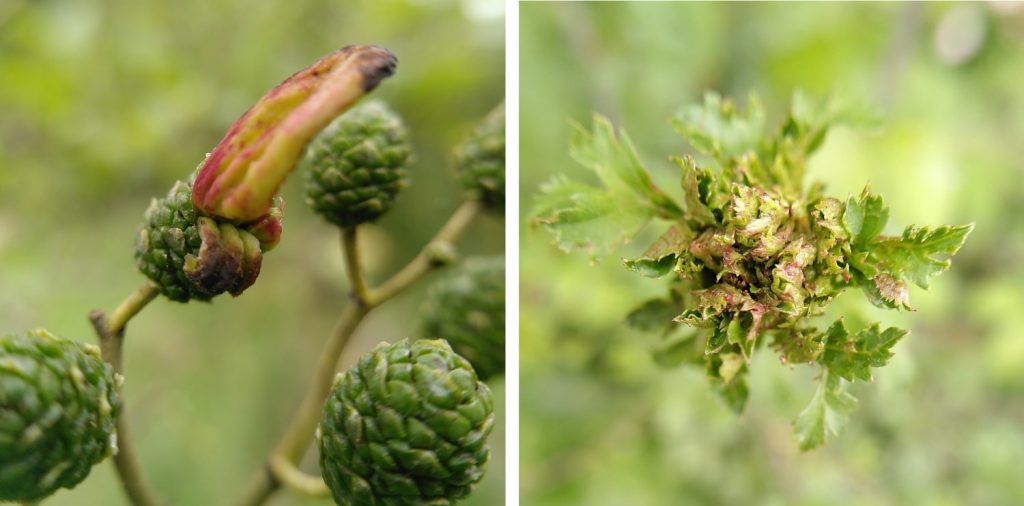
Alder Tongue (Taphrina alni) and Dasineura crataegi on Hawthorn
Lepidoptera
The caterpillar of the Hemp-agrimony Plume (Adaina microdactyla), a micro moth, creates a small exit hole on the stem of its host plant. We found this after a concentrated search of the abundant host plant. A few moth caterpillars were identified using the Obsidentify App, and we found Silver Y (Autographa gamma) resting on vegetation.
Fungi
We saw a few fungi, Fairy Inkcap (Coprinellus disseminatus) at the base of an Ash tree. The Bramble was frequently covered by Violet Bramble Rust (Phragmidium violaceum). We also found the smut Microbotryum stellariae on a small patch of Water Chickweed. This smut is very common on the plants later in the season.
Dragonflies
There were small numbers of dragonflies with Migrant Hawker (Aeshna mixta) and Common Darter (Sympetrum striolatum) still very active in the warm conditions. There was a little bird activity on Catcott Lows, with Canada Geese and Mute Swan, Great White and Cattle Egrets. A few mole hills along droves indicate this species is still very active in the locality.
All the records were entered on to SERC ORS system.
SJP 16/09/2024